70% of College Matriculants Accumulate Student Loans
College is expensive. Few families can underwrite the entire cost of attendance for multiple children over multiple years.
- 87% of students qualify for financial aid
- 40% of undergraduates work at least part-time
- 30%+ of students take federal student loans each year
- 70% of students have education debt at the end of their undergraduate studies
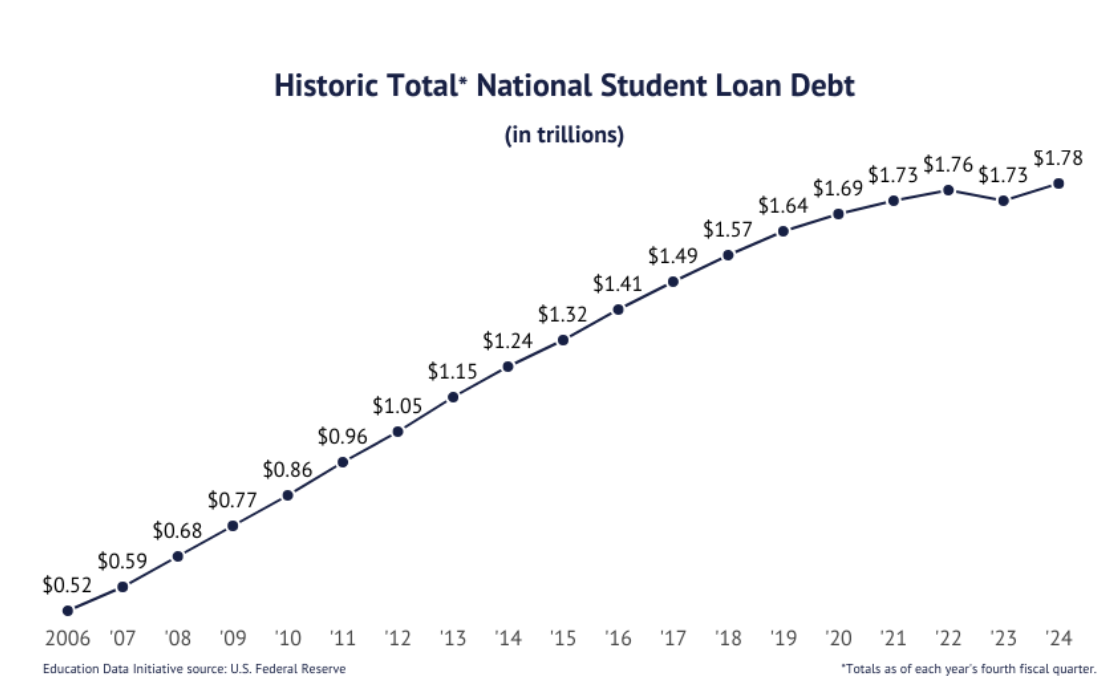
Student loan debt in the United States exceeds $1.8 trillion, with 43 million indebted students. Public universities enroll about 3 out of 4 students while private institutions account for the balance of matriculants. The average student loan debt is $43K.
A review of loans issued between 2009-2019 indicated that 2 out of 5 loans were in some state of financial distress within six years of issuance.
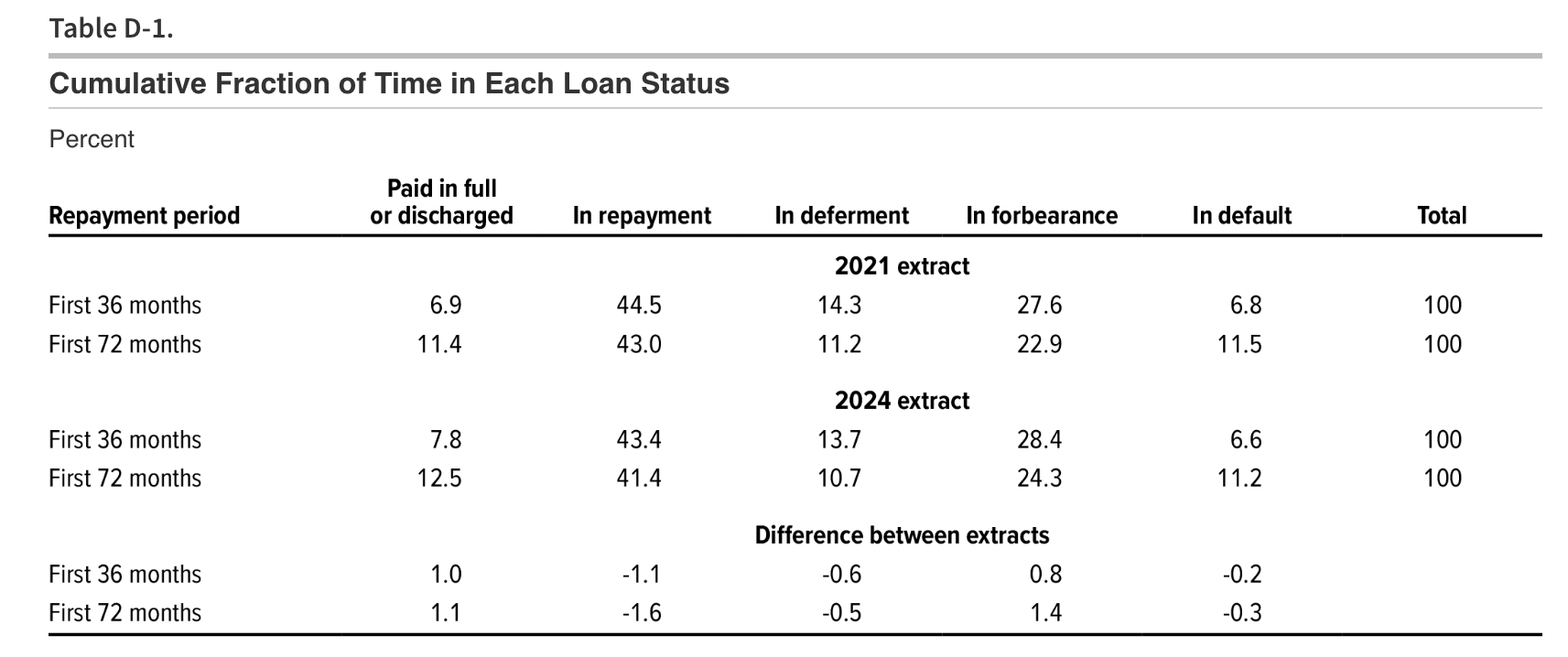
The presumption is after college, graduates go on to earn consistent, high income. The reality is a multitude of circumstances could arise, such as:
- Illness – permanent or temporary
- Needing extra time to graduate – due to switching majors or something else
- Pursuing advanced degree
- Failing to find a job, losing a job or only securing low wages
- Having expensive obligations, such as caring for sick or elderly family
During difficult times, when making regular payments becomes a challenge, students sometime do not ask enough questions are or purposefully misled into making student loan mistakes.
Being unaware of legal terms and special programs can have negative consequences by choosing a suboptimal repayment plan. For example, income driven repayment (IDR) plan caps payments at a maximum of 20% of your discretionary income. In this video, this doctor shares how his $240K student loans ballooned to $330K due to misinformation from his loan servicer.
When it Comes to Student Debt – Do Your Homework
Student loan borrowers should approach the burden of debt as diligently as they approach any other assignment – that is, they should:
- Master the basics by understanding “who, what, where, when and why”
- Educate themselves about options and scenarios
- Develop a plan that they can commit to, adjusting as circumstances dictate
- Identify sources for further help or clarification
- Allocate sufficient resources to the task at hand
- Familiarize themselves with mistakes to avoid and loan types available
Intertemporal Nature of Funding College
Investing in college help students with their understanding of the world, connecting to peers, and increasing future earning potential. Students can contribute to supporting themselves by working during college. Parents can invest in college funding prior to matriculation through programs such as 529 plans. Borrowing is the way to promise future earnings towards current college expenses.
Paying for College – Drivers of College Fees, Aid, and Debt
Tuition, room and board are the top lines in educational costs.
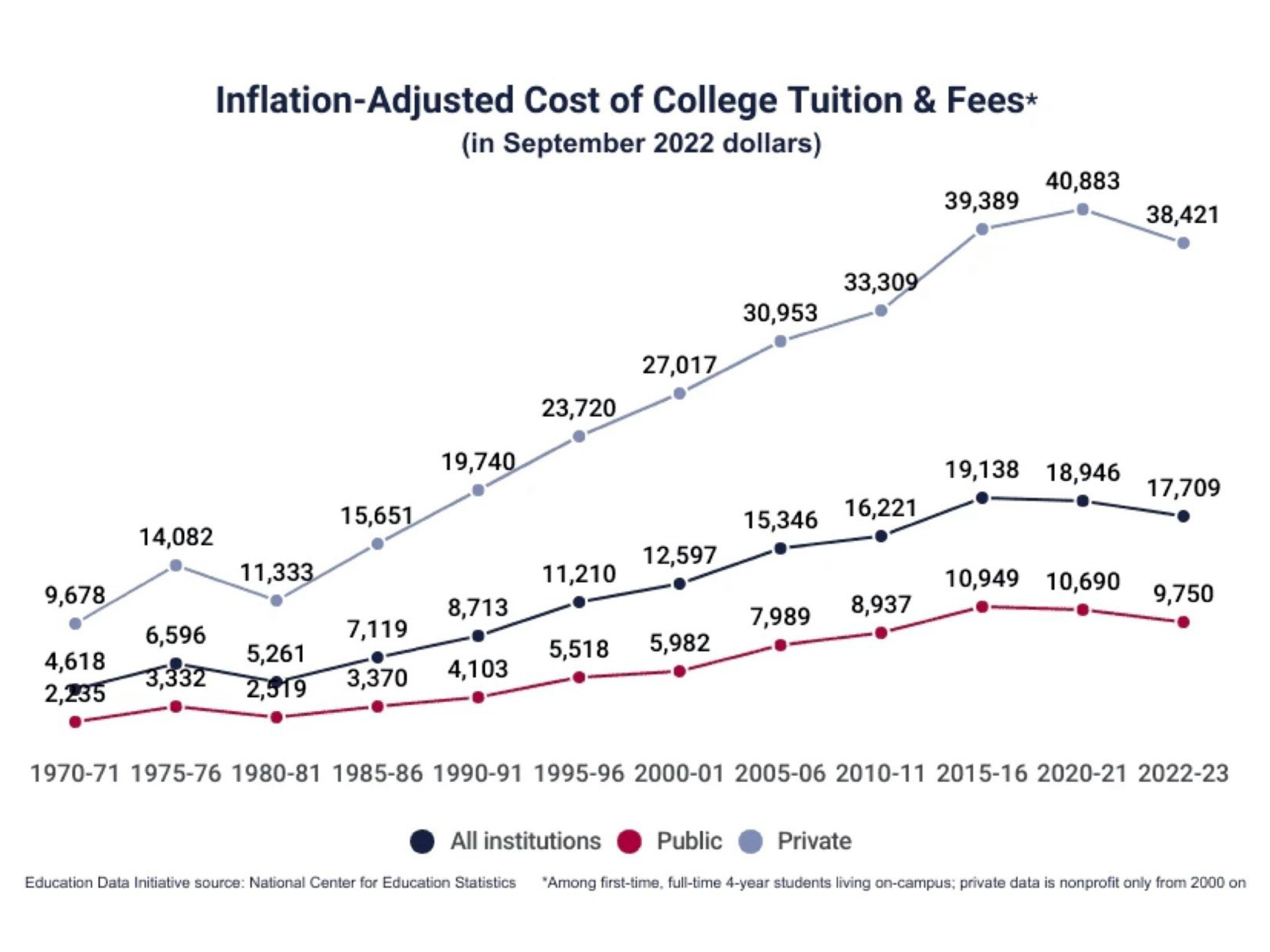
Average additional costs comparing college characteristics
| Characteristic | Less Expensive | More Expensive | Average Premium |
| College Type | Public | Private | $30K |
| Student residency | Public in-state | Public out of state | $34K |
| Housing | At home | On Campust | $14K |
Other items students should budget for include travel, health insurance, and supplies. While the most economical choice is typically living at home while attending a public, in-state university, an institution could be selected over another if job opportunities, fields of studies or on-campus activities are better suited to specific objectives.
Get the Financial Aid You Need
Total annual cost of attending the most expensive universities was $100K in 2025. In 2012, the DOE (Department of Education) estimated 20% of students eligible for financial aid did not apply.
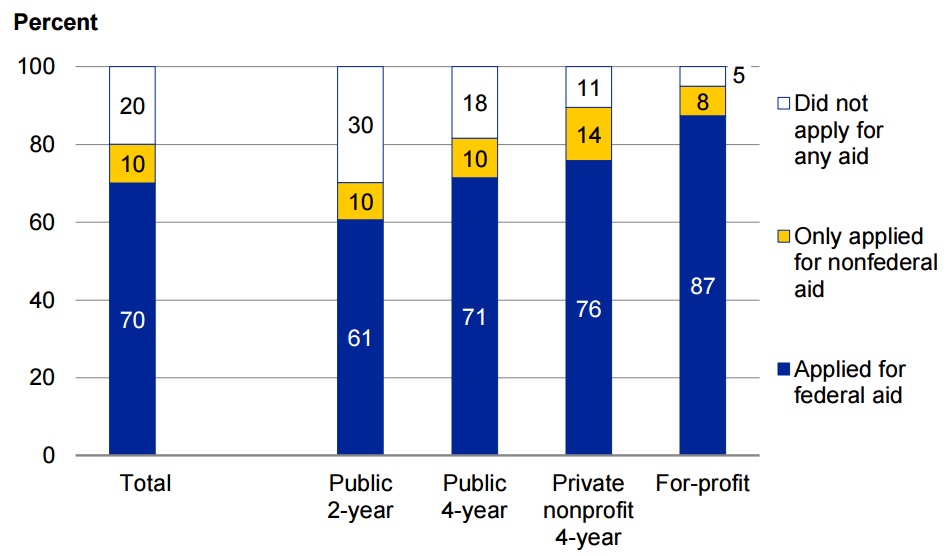
Whatever reason eligible students fail to apply for aid, it is a financial mistake.
While some hesitate to fill out the form, applying for FAFSA will establish how much financial aid is possible. Pursuing scholarships or grants could further supplement resources that could be put towards college costs. After a college has been selected, cost gathered, FAFSA completed and financial aid acquired, there may be a remaining gap.
If so, then working while in school becomes the next option. It is estimated that 2 out of 5 part-time students while 3 out of 4 full-time students work while pursuing their undergraduate degree.
Another frequently invoked option of funding school is getting student loans. In recent years, outstanding student debt has trended historically higher.
The 5 W of Student Debt
For the most part, the “who, why, where, and what” are straightforward. A student needs debt to pay for college because not all parents can write a check for $5K to $100K per child during their typical 3-6 college years.
| Years to obtain Baccalaureate Degree | Percentage of graduates |
| 2 – 3 years | 8% – 12% |
| 4 years | 40% – 45% |
| 5 – 6 years | 15% – 17% |
| Never graduate | Up to 40% |
“When” can be more nuanced. Loans accrue interest while outstanding – unless they qualify for a grace period of interest deferment.
With a subsidized federal loan, the government pays the interest while you are in school and during the six-month grace period. With an unsubsidized federal loan, interest builds from the day the loan is disbursed. If unpaid, this interest is capitalized (added to the principal balance) when repayment begins, meaning you pay interest on interest. Almost all private student loans accrue interest while you are in school. Certain loans allow interest-only payments to prevent unpaid interest being capitalized.
Student Loan Flexibility
The first flex student loans provide is being able to attend college. There are important decision nodes regarding student loans:
- Federal versus Private Loan
- Interest-only payment or interest capitalization
- Shorter loan repayment term with higher monthly payments
- Lower payments with longer repayment term
Federal loans are less costly, with typically lower interest rates, than private loans. If either unavailable or insufficient, then a private student loan could fund additional needs. Private loans allow higher borrowing amounts, more flexible pricing, quicker approval process and more payment options.
The ability to defer interest or to pay interest only are important to understand, especially if interest capitalization is to be avoided. Dispensation while in school matters since earning potential and work availability are typically lower while being a student. The presumption is post-graduation, work is attained and student loan payment begins.
After school attendance ends, repayments are scheduled for student loans. Borrowers should decide if they prioritize a faster payback with less interest paid or lower monthly obligations over a longer repayment schedule.
Having credible plans at the outset of student loans is advised. Adjusting as circumstances dictate is imperative. To the extent possible:
- Do not skip payments – the liability remains while your credit score suffers
- Communicate with your lender, including sharing your contact details
Other matters to find out about include:
- Deferment or Forbearance – temporarily reduce or pause student loan payments
- Consolidation – combine multiple loans into fewer loans
We continue to examine student loan repayment options during personal difficulties in the article Things to Know About Forbearance or Consolidation.