There were 367,460 American foreclosures in 2025, an increase of 14% compared to the prior year. A double-digit growth in a negative indicator is never good news. However, the gross number of foreclosures and the relative foreclosure rate compare favorably to the years before, during and after the Great Recession of 2007 – 2010.
The current uptick in foreclosures have three main causes:
- Cessation of Covid-19 forbearance
- Current affordability crisis due to greater home appreciation relative to income
- Higher interest rates and other housing costs
The deluge of foreclosures from 2007 -2015 were driven by:
- Surging home prices
- Lax underwriting standards
- Speculative home investing spurred by the interaction of factors 1 and 3
Historical Foreclosure Data From 2005 to 2025
| Year | Total Foreclosures | Average Annual Foreclosures |
| 2005-2009 | 7,691,385 | 1,538,277 |
| 2010-2014 | 9,075,523 | 1,815,105 |
| 2015-2019 | 3,810,971 | 762,194 |
| 2020-2024 | 1,368,875 | 273,775 |
Foreclosure Moratorium During COVID-19
In early 2020, the Covid-19 epidemic prompted shelter-in-space mandates which in turn triggered labor market and income disruptions. Foreclosures in 2020 and 2021 were likely lower than expected due to the forbearance reprieves issued by several Federal acts and agencies.
| CARES Act (General) | March 18, 2020 | July 31, 2021 |
| FHFA (Fannie/Freddie) | March 2020 | July 31, 2021 |
| VA (Veterans Affairs) | March 18, 2020 | July 31, 2021 |
| CFPB (New Filings) | August 31, 2021 | December 31, 2021 |
About 3 out of every four mortgages are insured or made by federal entities. Many single-family mortgage borrowers used the expanded mortgage forbearance provision in the CARES Act, especially if they struggled to make payments. Forbearance provision usage peaked in May 2020 at 7 percent of all single-family mortgages (3.4 million) and has declined to about half of all borrowers who used forbearance during the pandemic per the GAO’s analysis of the National Mortgage Database.
Since late 2021, the moratoriums have been lifted, and banks have renewed normal filing procedures for homeowners behind on their mortgage. The foreclosure process varies, depending on if the jurisdiction is a judicial or non-judicial foreclosure state. With the latter, lenders do not need to sue to go through a court process.
The Stages of Foreclosure
In a non-judicial state, a delinquent property could be padlocked as quickly as 30 days. In a judicial state, it is not unusual for the foreclosure process to stretch out over a year. New York is a judicial foreclosure state. As such, there are several – sometimes overlapping or meandering – steps:
- Payment default (30 – 90 days)
- Notice of default (30 – 90 days)
- Lawsuit filing (Lis Pendens, Summons and Complaint)
- Affidavit of Service, Request for Judicial Intervention, Attorney Affirmation
- (Borrower) Answer
- Notice of Appearance, Discovery exchange, Failure to Answer
- Mandatory Settlement Conference
- (Possible) Default
- Order of Reference
- Judgement of Foreclosure and Sale, possibly post-intermediation
- Trial
- Public auction (post 30 days newspaper notice)
- Sale
- Eviction and possible return of excess funds
To summarize, the key stages are default (late payment), notice of default, legal process to enact foreclosure, auction, proceeds from sale and eviction, unless either the homeowner becomes current or comes to a settlement with the lender. While atypical, any process taking over six years might trigger statute of limitation protection.
One type of settlement widely used during the Great Recession was “a short sale”. The home is sold for less than the mortgage, often with the borrower able to walk away without owing for the deficiency.
Foreclosures during the Great Recession
Heading into 2007, home prices continued a long upward ascent. The lax underwriting standard for “sub-prime” loans increased the pool of buyers, helping to buoy prices.
- No-income verification was widespread.
- Traditional 20% down payment requirement was lowered to 3% or even zero.
- Adjustable-rate mortgages (ARM), several points below fixed-rate loans, were available
- Teaser rates (that would re-price in a year) were even lower than ARMs
Rising home prices translated to increased equity. This both encouraged more speculative buying and enable credit-challenged borrowing. On the lending side, generating fee income and then moving loans off the balance sheet via CDO (collateral debt obligation) securitization fueled the origination cycle. Once prices stalled and even reversed, borrowers were unable to qualify for additional financing and banks couldn’t package and peddle mortgages with spotty payment history. Even the loosest underwriting standards couldn’t justify financing over-valued homes.
The bailout extended to financial institutions was not available to homeowners. This transfer of wealth exacerbated the ongoing wealth inequality trend of the past five decades.
Median Home Prices and Affordability
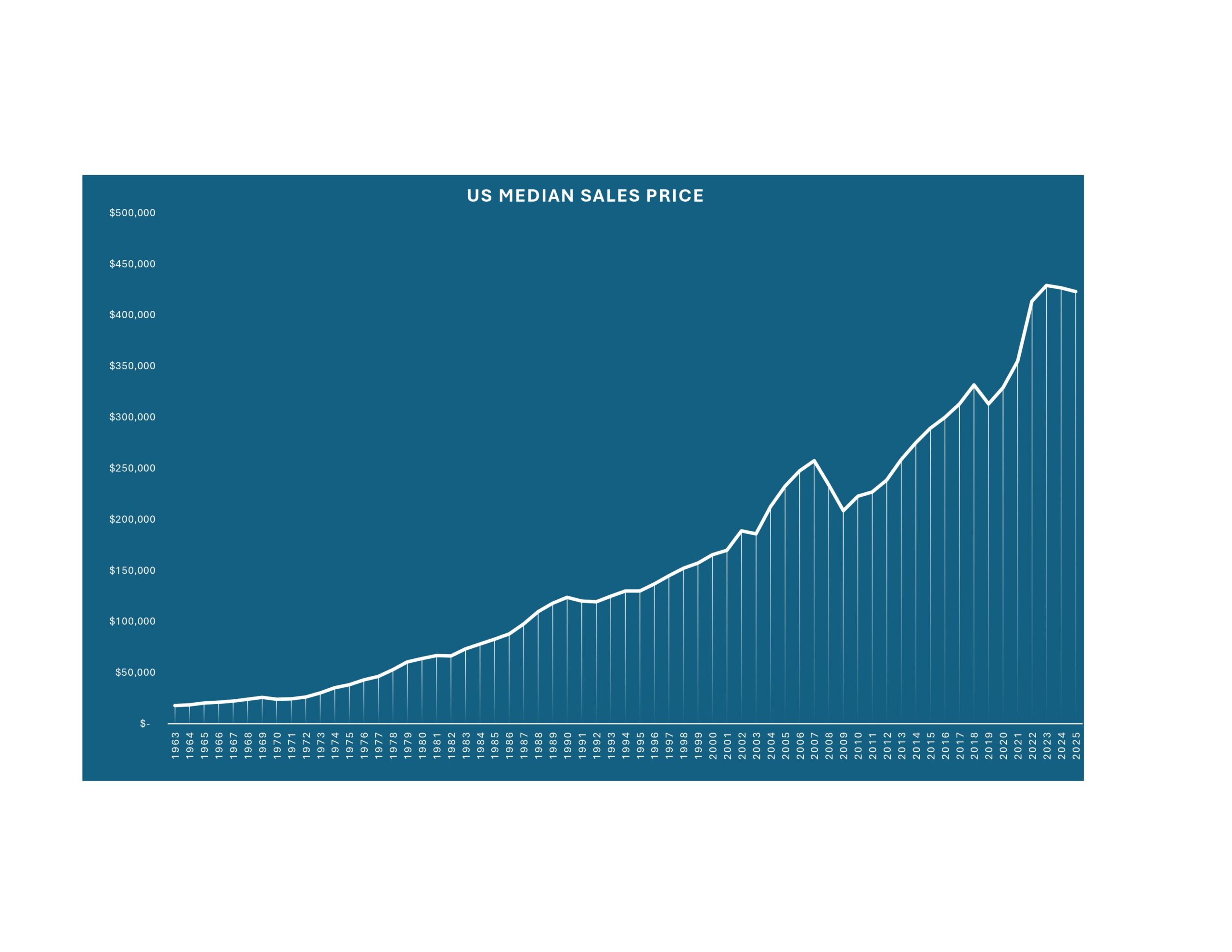
In 1989, the median home price was $144K while the median income was $29K, or a ratio of just under 5:1. In 2024, the ratio of median home price to median household income was just over 6:1 as reflected below, per the data from the Federal Reserve Bank of St. Louis:
| Year | Median Home Price | Median HH Income | Home Price/Income |
| 1989 | $144,300 | $28,910 | 4.99x |
| 1994 | $153,600 | $32,360 | 4.76x |
| 1999 | $189,100 | $40,700 | 4.65x |
| 2004 | $262,900 | $44,330 | 5.93x |
| 2009 | $257,000 | $49,780 | 5.16x |
| 2014 | $331,400 | $53,660 | 6.18x |
| 2019 | $375,500 | $68,700 | 5.47x |
| 2024 | $519,700 | $83,730 | 6.21x |
Data from other sources indicate a more pronounced spike in the affordability index:
The all-time-high home price-to-income ratios seen last year were mainly driven by rapid home price growth during the pandemic. Nationally, median single-family home prices rose by nearly one-half (48 percent) between 2019 and 2024, at more than twice the rate of median income, which rose by 22 percent. Similarly, in large markets across the country home prices grew by anywhere from 24 to 79 percent since 2019, while incomes only increased by 8 to 36 percent.
And:
Looking at prices and income alone, houses have gradually become less affordable over the past 40 years. In 1985, median price of new houses 3.6 times the median income. In 2000, the ratio of home prices to median income reached 4 for the first time and by 2023, it had climbed to 5.3. Between 1985 and 2023, the median household income in the U.S. grew 241 percent while the median price of houses sold in the country climbed 408 percent over the same period.
Besides the ratio of the median home price to the median income, one must consider other elements that factor into mortgage costs and housing expenses, such as:
- Interest rate
- Downpayment percentage
- PMI (private mortgage insurance)
- Underwriting standards
- HOA (homeowner association) fees
- Utility Costs
- Homeowner insurance policies
Referencing back to the table, 2024 median household price was 38% higher than 5 years prior.
| 2019 | 2024 | |
| Median Price | $375,500 | $519,700 |
| Downpayment @ 20% | $75,100 | $103,940 |
| Mortgage @ 4.00% | $1,434.16 | $1,984.90 |
| Mortgage @ 6.75% | $2,696.61 | |
| PMI (if down is less than 20%) | $ 346.47 | |
| Potential Incremental Costs | $1,608.92 | |
| Required Income @ 32% | $4,481.75/month = $54K/year | $9,509.63/ m = $114K/ y |
The required income to support the price increase and increased mortgage rate coupled with possible PMI requirement is 112% more. In specific areas, certain dynamics might introduce other burdens with additional affordability challenges.
In 2021, the 12-story Surfside, Florida condominium collapse caused 98 deaths. This disaster ushered legislation requiring rigid inspections and sufficient reserves to fund major structural repairs. It is estimated that special assessment fees doubled some HOA costs while increasing homeowner insurance costs by over 50%, if underwriting was available altogether. As a result, in many coastal Florida areas, listings are up while prices are down.
Regional Trends: States Most Affected by Foreclosures
Rising interest rates and stagnant wages are only part of the problem. Overall inflation, tariffs, natural disasters from climate change, reduced tourism and job losses are additional headwinds challenging homeowners and impacting foreclosures.
Foreclosure rates vary greatly across states. In 2025, the state with the highest foreclosure rate was Delaware (1 per 1,612 homes). Among the most populous states, Florida ranked 3rd (1 per 2,067 homes), California 11th (1 per 3,085 homes), Texas 14th (1 per 3,288 homes) and New York 21st (1 per 4,025 homes). Some regions are hit harder due to environmental factors (Florida), economic instability (Texas) or rapidly rising home prices (California).
Preventing Foreclosure: Resources and Strategies for Homeowners
Understanding these impacts helps communities respond effectively. Preventing foreclosures benefits both individuals and society at large. Communities with high foreclosure rates often face economic challenges. Property values decline and homes may be abandoned. With lower property taxes, it becomes more difficult to fund municipal services such as police, schools or libraries. If coupled with job losses, blight can settle in.
Avoiding foreclosure requires proactive measures. Homeowners should seek help at the first sign of financial trouble. Quick action can improve the chances of keeping the home.
Several resources are available. Government programs help those in need. Counseling services provide guidance and support.
Some effective strategies that can prevent or stall foreclosure includes loan modifications or refinancing options. These can lower monthly payments, making them more manageable.
Communication with lenders is key. Discuss your situation openly and explore possible solutions. By staying informed and using available resources, homeowners can better navigate financial challenges.
Some helpful resources include:
- Government assistance programs
- Financial counseling services
- Loan modification options
- Communication with mortgage lenders
The Broader Economic Impact and Future Outlook
Foreclosures have a ripple effect on the economy. They affect local markets and national financial stability. A rise in foreclosures can signal broader economic issues.
Communities with high foreclosure rates often face:
- Decline in property values
- Reduced government revenue
- Increased demand for rental properties
- Potential tightening of lending standards
Foreclosures destabilize communities. With home ownership comprising a significant portion of generational wealth, it is important to consider steps to minimize financial losses and familial well-being.